
Figures, Fables, Histories
In collaboration with Dawani Art Gallery
Curated by Narendra Pachkhédé
Drawn from the private collection of Murli Dawani, this exhibition brings together works by modern and contemporary artists engaging with memory, migration, mythology, and history. A Canadian art collector, gallerist, and architect, Dawani has built a collection rooted in South Asian modern and contemporary art, with Pakistan among its deepest fields of encounter. Gathered over decades through friendship and trust, these works carry the intimacy of images lived with and kept close. Rather than offering a survey, the exhibition presents a field of vision shaped by affinity, displacement, care, and the slow discipline of looking.
The exhibition unfolds through the body, fable, landscape, and public memory, moving from Khadim Ali’s meditations on violence, inheritance, and Bamiyan to the intimate and unsettled figures of Jamil Naqsh, Colin David, Iqbaal Hussain, and R. M. Naeem. It continues through the satirical, political, allegorical, and dreamlike worlds of A.R. Nagori, Anwar Maqsood, Anwar Saeed, Tassaduq Sohail, Waseem Ahmed, Bashir Ahmed, and Unver Shafi Khan, before arriving at Afshar Malik’s From Here, One Can See…, which offers a final meditation on vantage point.
Together, these works place figure, fable, and historical image in restless conversation, moving between lyricism and fracture, intimacy and public life, beauty and unease. A collection is never the whole horizon; it is a vantage point—partial, intimate, and deeply revealing.
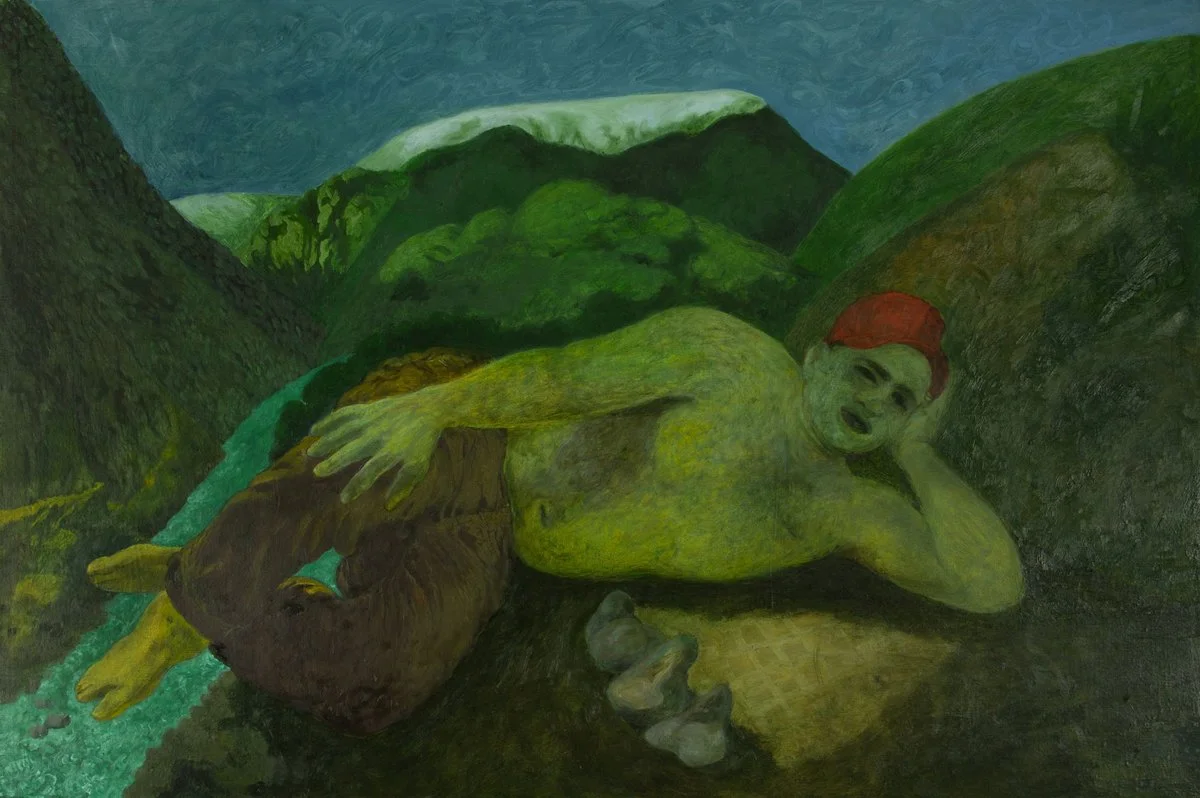
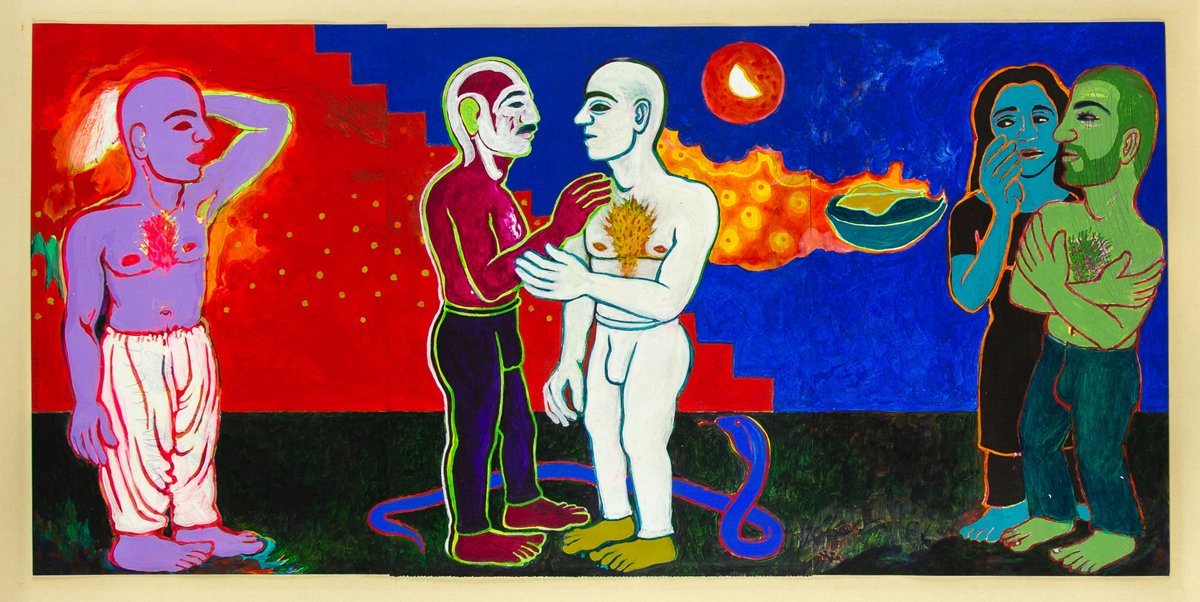
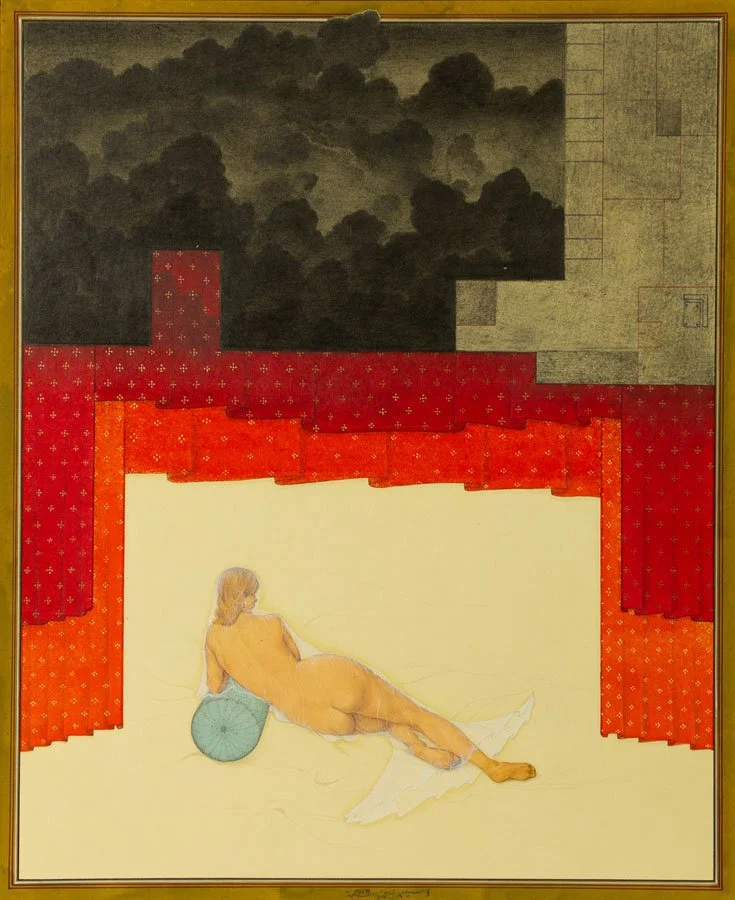
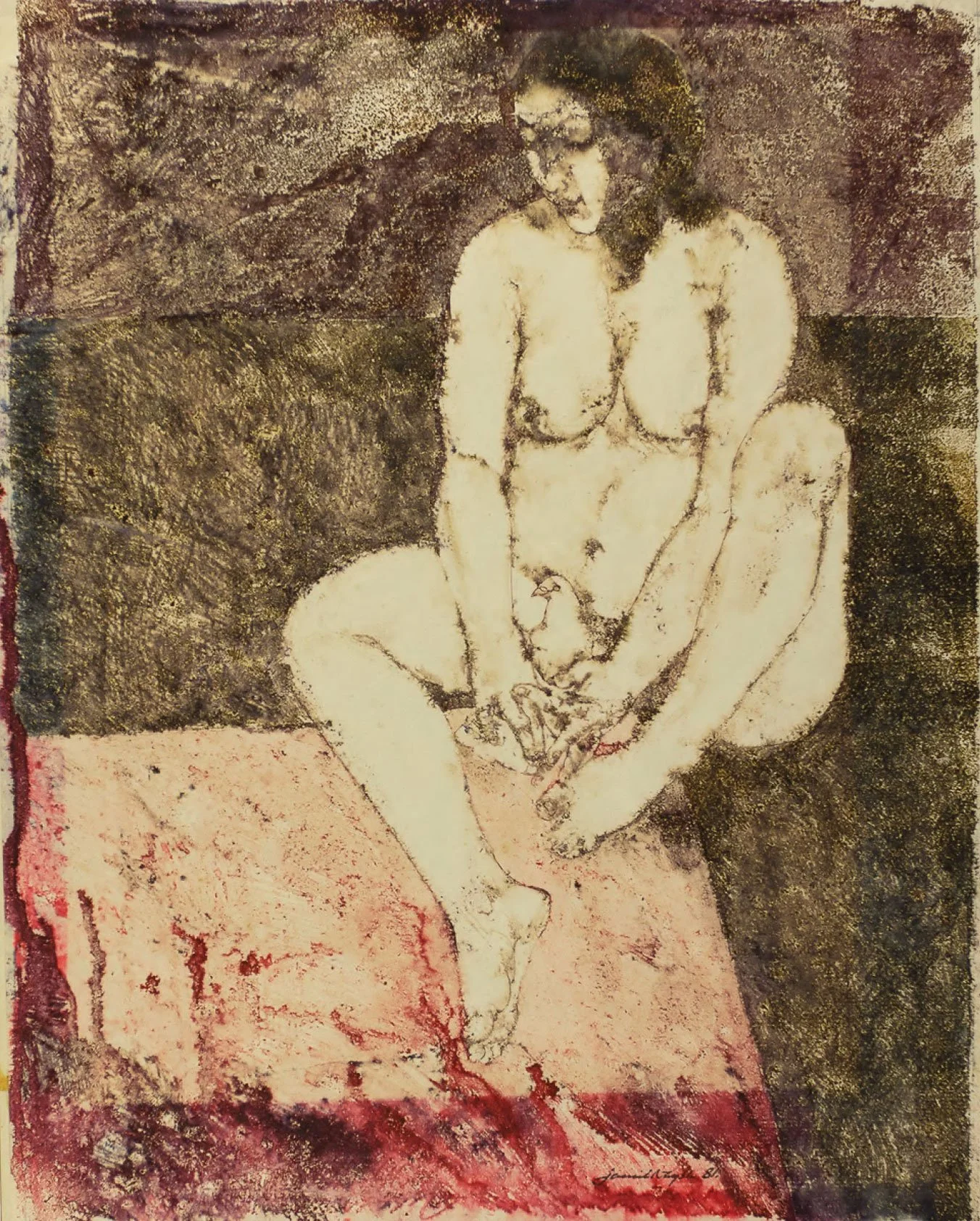
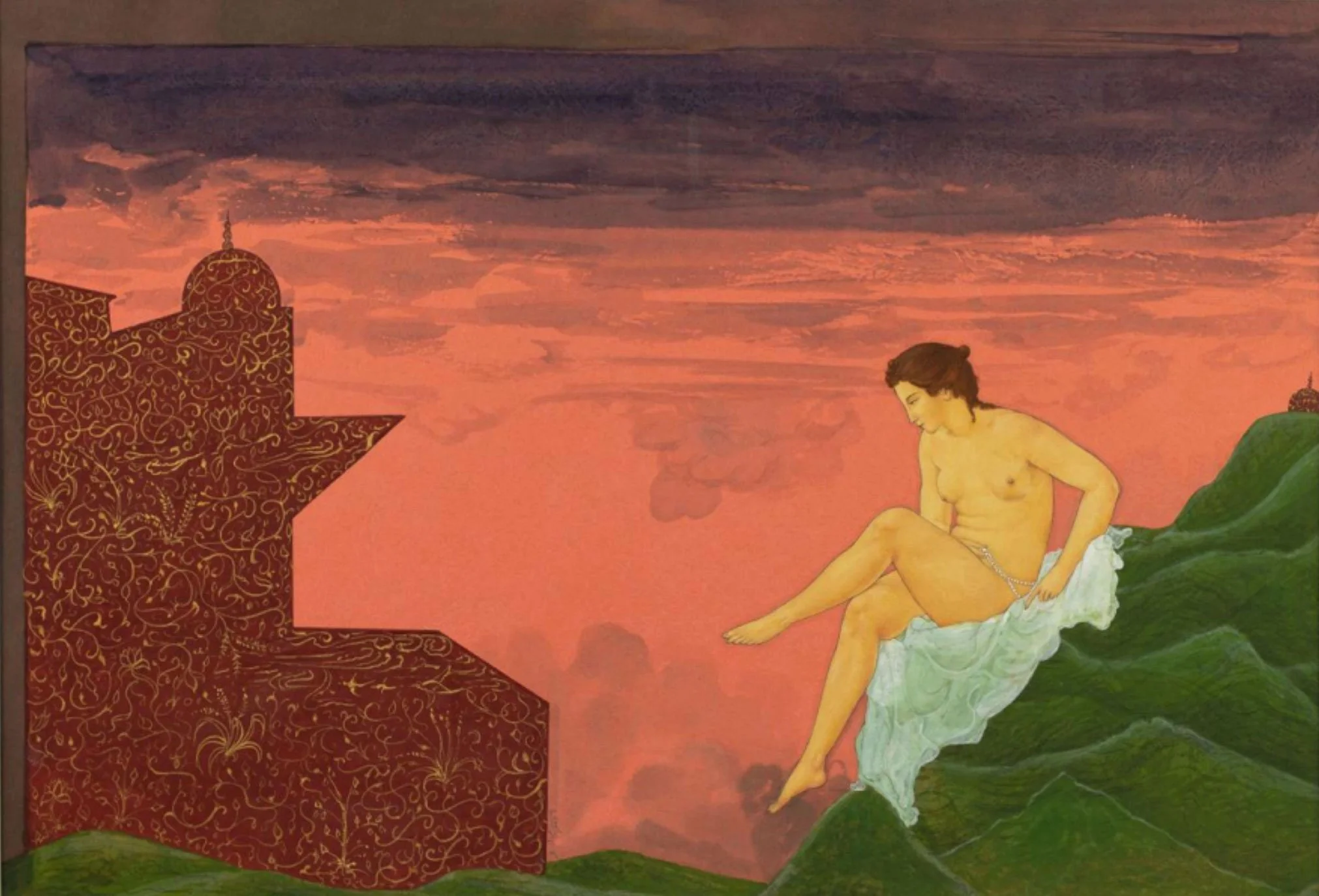
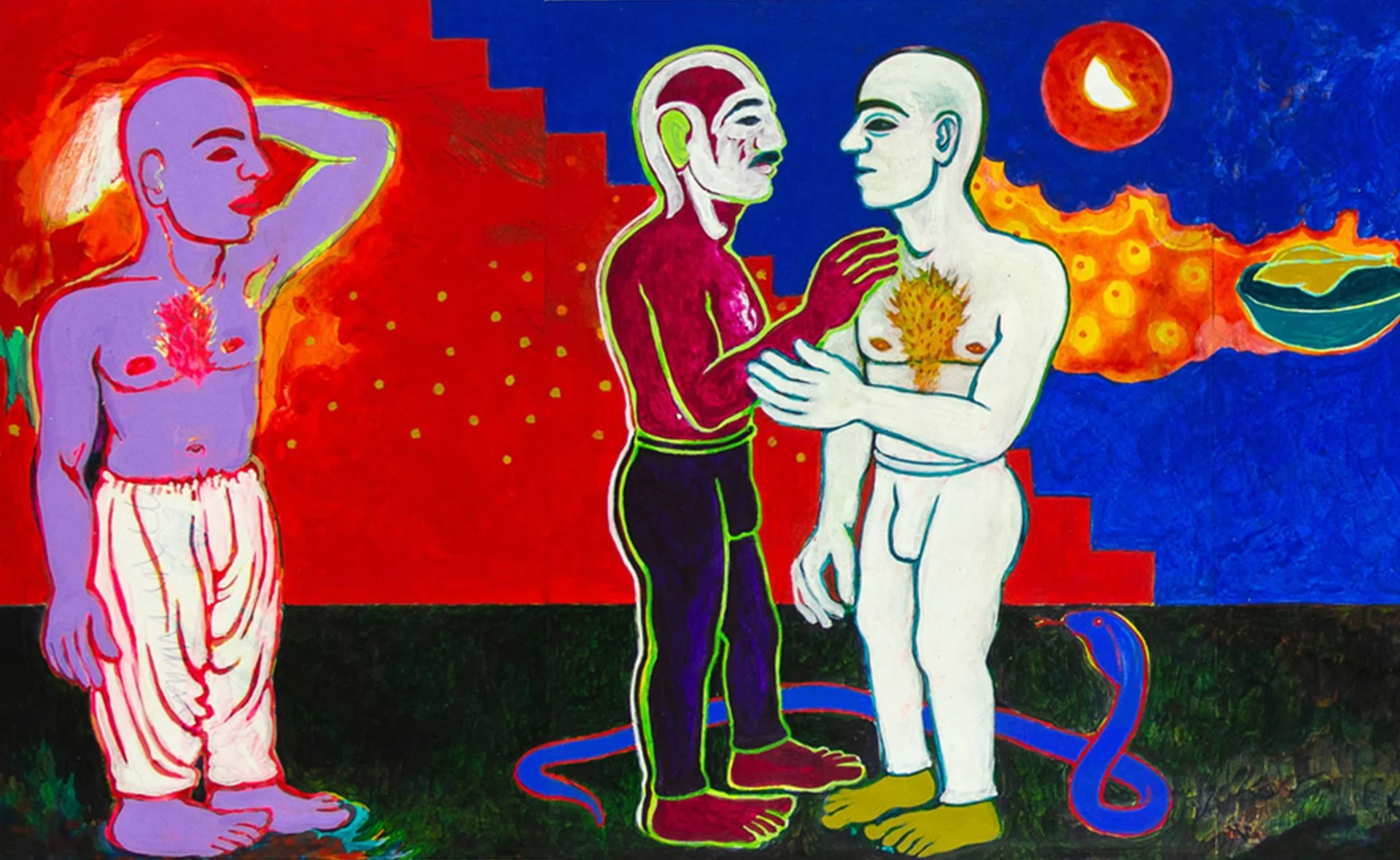
Figures, Fables, Histories: From Here One Can See can be read through its two temporal edges. Jamil Naqsh’s 1982 work belongs to an older modernist confidence: the figure held by the studio, by the authority of line, by the private discipline of looking. Afshar Malik’s From Here, One Can See, made in 2018, arrives in another register. The body remains, but it no longer rests easily within pictorial space. It is placed, exposed, partly absorbed by terrain. Sight has become positional. One does not simply look. One looks from somewhere.
Between these two edges lies the exhibition’s central pressure: a concentration of works from the first decade of the twenty-first century. In Pakistan, and across South Asia more broadly, that decade marked a hinge between the older languages of national modernism and the unsettled conditions of contemporary art’s global circulation. The afterlife of General Muhammad Zia-ul-Haq’s cultural and moral narrowing had not disappeared. After 9/11, Pakistan, Afghanistan, Islam, piety, militancy, violence, and surveillance entered a new international vocabulary. At the same time, markets widened, diasporic routes expanded, and institutions, residencies, fairs, and collections began to look more closely at South Asian contemporary art. Recognition came with unease. To be seen was also to be classified, desired, suspected.
The thirteen artists and twenty works gathered here do not form a school, nor do they announce a manifesto. Their force lies elsewhere: in the way they make the image carry difficult knowledge without reducing it to statement.
These artists inherited modernism, but not its old assurance. They inherited manuscript, miniature, and figural traditions, but not as stable patrimony. They inherited satire, fable, allegory, landscape, and the body as languages already marked by public life. By the first decade of the century, a painted figure, an animal, a ruined landscape, a mask, a joke, a mythic fragment, even a beautiful surface could no longer remain merely formal. Each carried some trace of what had gathered around it.
The human figure is central to this passage, but it does not appear as a heroic emblem or stable national symbol. In Naqsh, the figure still carries the inward charge of modernist looking: poise, desire, withdrawal, the hand’s authority. In many of the later works, the body is less settled. It appears exposed, watched, erotic, scarred, comic, theatrical, vulnerable, and sometimes strangely emptied out. Around it gather animals, masks, ruins, landscapes, myths, costumes, gestures, and fragments of older pictorial systems. The body becomes less a subject to be represented than a site where private experience and public history meet.
That meeting takes different forms. Khadim Ali turns inheritance into a haunted theatre, where myth and violence cannot be separated from Bamiyan, exile, and the memory of broken images. Waseem Ahmed and Bashir Ahmed draw from manuscript-derived pictorial traditions with the seriousness of artists who know that tradition is not a decorative archive. It is a live and unstable field: capable of beauty, critique, mourning, and concealment. A.R. Nagori and Anwar Maqsood bring satire close to moral sight. Their works understand that humour, in a culture schooled in caution, is not lightness. It is precision under constraint. Anwar Saeed, Tassaduq Sohail, Colin David, Iqbaal Hussain, R. M. Naeem, and others return the eye to the body’s social life: its exposure, sensuality, embarrassment, tenderness, violence, and performance.
Fable, here, is not escape. It is a method of making difficult histories visible without flattening them into declaration. It allows distortion, disguise, cruelty, tenderness, and absurdity. It lets the animal carry the human, the landscape carry memory, the body carry a public injury without presenting itself as evidence. Satire sharpens this method further, preserving judgment where public language has become inadequate or constrained.
Beauty, too, becomes double-edged. It seduces, then refuses innocence. This is the exhibition’s central argument: the body carries history, fable transforms it, and the image keeps both present. The works do not illustrate crisis. They show how crisis enters the habits of looking. They do not abandon beauty. They make beauty answerable to what it has seen.
Seen this way, Figures, Fables, Histories maps a passage from the figure as modernist subject to the figure as historical witness. Naqsh marks one end: the image as cultivated intimacy, a chamber of looking. Malik marks another: the image as vantage point, terrain, and the uneasy knowledge that seeing is never neutral. Between them, the first decade of the twenty-first century appears as a hinge, when Pakistani and South Asian contemporary art carried several burdens at once: the memory of modernism, the violence of political history, the seductions of the market, the scrutiny of the post-9/11 gaze, and the persistence of older pictorial forms that refused to die quietly.
That these works are drawn from one collection is not incidental. A collection does not speak with the false authority of a survey. It records proximity: what was seen, chosen, kept, lived with, returned to. Yet precisely because of that intimacy, this exhibition catches something larger than private taste. It catches a moment when artists were asking what an image could still do under the burden of history. Could it remember without becoming archive? Could it register harm without becoming spectacle? Could it remain beautiful after beauty had become suspect? Could it look back?
Naqsh and Malik hold the two ends of that question. One gives us the figure before the full burden of contemporary visibility had settled upon it. The other gives us the figure after landscape, history, and position had entered the act of seeing. Between them, the exhibition asks what happened to looking in those hinge years. Its answer is quiet but severe: to see is never only to see. It is to inherit a place, a distance, a scar, a set of relations. It is to stand somewhere, knowing the horizon is always partial, and that what lies before us has already been touched by history.
— NARENDRA PACHKHÉDÉ
CURATOR / ART ADVISOR